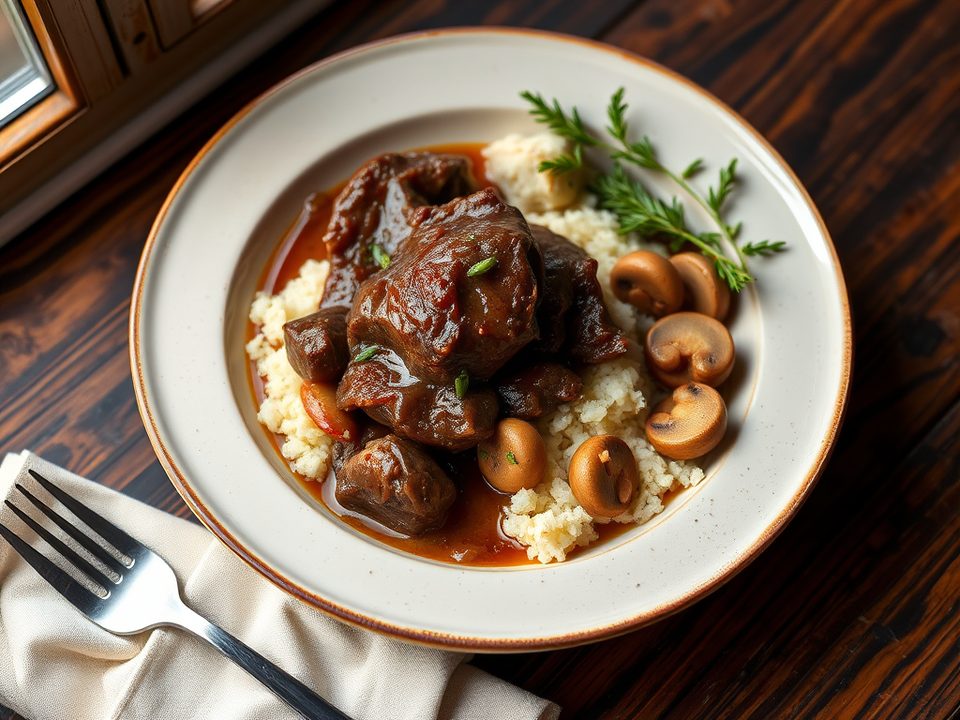
Steak and Kidney Pudding
Beef and kidney in a rich gravy inside a soft, steamed suet crust that soaks up every drop.
- Time5 hr
- LevelMedium
- Costabout £1.83 a head
Cost is worked out from Aldi and Tesco shelf prices in October 2026. Your shop and brands will differ.
Estimated nutrition per serving
- 686kcal
- 44.4gcarbs
- 2.8gof which sugars
- 43.3gfat
- 15.5gsaturates
- 29.6gprotein
- 3gfibre
- 2.7gsalt
A rough estimate worked out from the ingredients, for the serving size above. It is a guide only and not medical advice. If you count carbs or manage diabetes, check with your own tools and your care team.
Ingredients
Tick what you need to buy. It goes on your shopping list.
Method
- 1
Toss the steak and kidney with the plain flour, salt and pepper in a bowl until coated. Stir through the onion, mushrooms, Worcestershire sauce and thyme.
- 2
Mix the self raising flour, suet and the 0.5 tsp salt in a large bowl. Add the water a little at a time and mix to a soft dough. Do not knead.
- 3
Grease a 1.5 litre pudding basin with the butter. Cut off a quarter of the dough for the lid and roll the rest into a round about 30 cm wide. Press it into the basin so it hangs slightly over the rim.
- 4
Spoon in the filling and pour over the stock, to just below the top. Roll the lid, wet the edge of the pastry, and press the lid on to seal. Trim the edge.
- 5
Cover with a sheet of baking paper and foil, pleated in the middle to allow for rising. Tie tightly with string. Set on a trivet or upturned saucer in a large pan with boiling water to halfway up the basin.
- 6
Simmer with the lid on for 4 hours, topping up with boiling water so it never boils dry.
240 min - 7
Lift out carefully, remove the foil and paper, and leave to stand for 10 minutes. Run a knife round the edge. Serve straight from the basin with mash and peas.
Double check before you cook. Recipes can contain mistakes. Any diet labels come from the ingredients as written in this recipe and are a guide, not a guarantee. Always check every ingredient and the packet label for allergens and cross contamination, and ask your doctor or dietitian what is right for you, especially with coeliac disease, diabetes or a serious allergy. This is not medical advice.